
Industrial kitchens run on precision and reliability, where equipment mishaps can halt operations in a flash. Keeping kitchen flow uninterrupted is key. Thats why proactive routine checks are the backbone of efforts to prevent dishwasher breakdowns, especially during peak service times when every dish counts.
Most kitchen leaders know the headache of a shut-down dishwasher in the middle of a rush. Loss of cleaning capacity translates directly into lost revenue and customer trust. By setting up regular inspections and care schedules, teams can cut the chance of unexpected failures while making the most of their investment.
Explore these detailed, actionable steps for establishing reliable routine checks that prevent dishwasher breakdowns. Youll gain insights that create confidence on the line and keep dishware, staff, and customers consistently satisfied.
Daily startup checks to set your kitchen up for flawless service
Starting each day with the right checks can prevent dishwasher breakdowns before service even gets busy. Teams that incorporate these checks into their pre-shift routines build confidence for the hours ahead.
Sticking to a daily checklist is like putting on your seatbeltits a minor effort that averts major setbacks. Just five minutes can reveal issues needing fast attention, safeguarding the days smooth flow.
Inspect for visible leaks and residue before the first cycle
Check beneath and around the machine for puddles or damp spots. A leaking hose or gasket might not drip during the cycle, but overnight seepage leaves telltale moisture behind the machine or under its feet.
Lift the wash arms and look for discoloration or sticky buildup. If hard water spots or slimy residue show up this early, it signals a need for deeper cleaning or immediate repairdont delay, or hidden problems grow.
Wipe all seals with a clean cloth. If the towel picks up grime, it’s a cue to schedule maintenance before loading dishes. Fast action on small clues prevents dishwasher breakdowns even in the busiest shifts.
Ensure chemical and rinse agent levels are correct
Check the detergent, rinse aid, and sanitizer reservoirs as a team member starts. If any bottles or tanks run low, refill before loading dishes. Running dry during service leads to incomplete cycles and unclean results.
Confirm labeling matches dispenser use, and that dosing settings follow manufacturer instructions. Record the levels in a daily log, so patterns or sudden changes trigger further checks or ordering before supplies run out.
Whenever a new product is introduced, run a test load and observe for excess sudsing, residue, or smell. Properly adjusted chemicals are critical to prevent dishwasher breakdowns caused by buildup, corrosion, or stuck sensors.
| Check Item | What to Look For | Frequency | Action if Issue Found |
|---|---|---|---|
| Leaks or puddles | Moisture under or behind unit | Daily start | Tighten hose, call technician if recurring |
| Detergent/Rinse Levels | Reservoirs below half | Daily start | Refill immediately, check dosing accuracy |
| Spray Arm Condition | Buildup, wear, or clogs | Daily start | Clean arms, replace if damaged |
| Door Seals | Loose, torn, dirty | Daily start | Wipe seals; report excessive wear |
| Control Panel Lights | Error or warning status | Daily start | Follow manual, correct before operation |
Weekly deep-dive: Addressing hard-to-spot trouble sources
Weekly routines dig beneath the surface, identifying early wear or buildup that daily cleans might miss. A thorough approach to these tasks can prevent dishwasher breakdowns mid-service, long before visible problems set in.
Assigning responsibilities and documenting findings makes a difference. A dated log or roster helps catch subtle changeslisten for unusual sounds, monitor cleaning performance, and keep tabs on key wear points each week.
Filter cleaning for top-notch water flow
Remove both primary and secondary filters. Hold each up to the light to check for soap scum or food particles embedded in the mesh. Rinsing under strong water pressure clears minor clogs immediately.
- Lift filters straight up to avoid bending or damaging fragile parts. Even small dents can block water and trigger cascading issues during peak hours.
- Use a brush to loosen stuck debris where water pressure isnt sufficient. Dry thoroughly before reinstalling to discourage mold or bacteria from growing inside the unit.
- Double-check the filters orientationincorrect placement creates backpressure, which strains pumps and can ultimately prevent dishwasher breakdowns from being completely avoided if skipped too many cycles.
- Record cleaning in a weekly log. Staff changes or high turnover make it easy to lose track; scheduled checks create reliability for both staff and equipment.
- End with an empty test cycle to clear any shaken-loose particles. Observe for normal water flow and check for any leaks that might have started during cleaning.
Following this protocol keeps water jets strong, minimizes rewash, and helps prevent dishwasher breakdowns due to blocked or worn filters.
Assess wash and rinse arm performance after heavy use
Spin each wash and rinse arm by hand, feeling for stiffness or jerking. If movement isnt smooth, look for mineral rings or bent parts as likely causes.
- Remove spray arms weekly for soaking in a mild descaling solution. Check for holes blocked by food fibers or scaleclear each using toothpicks or soft brushes.
- Inspect mounting points. If an arm wiggles loosely or creaks, realign or tighten it. A secure fit ensures even wash coverage and reduces the risk of damage under pressure.
- Listen during a test cycle for abnormal rattling. Timing this routine after the dinner rush means issues can be logged and repaired during off hours, reducing downtime risk.
- Note improvements in cleaning or drying quality after intervention. Reward staff who spot early warning signs, reinforcing accountability and a proactive culture in the kitchen.
- Never force arms back onto their postsmisalignment compounds wear and leads directly to pump or motor strain. Stay patient, and consult diagrams when in doubt.
These weekly steps, integrated into closing protocols, work to prevent dishwasher breakdowns that emerge without warning in industrial kitchens.
Critical monthly reviews: Calibrating for longevity and reliability
Monthly routines catch mechanical drift and calibration changes that escape more frequent checks. A regular calendar slot ensures this essential step doesn’t fall by the wayside, and catches creeping performance loss before it snowballs.
Regular reviewer walk-throughs empower the team to spot subtle signs of impending trouble. By scheduling short but detailed assessments, kitchens can confidently prevent dishwasher breakdowns that impact the whole service flow.
Monitor water temperature accuracy for consistent sanitation
Verify wash and rinse water temperatures using a digital thermometer, not just the built-in gauge. Standards require wash cycles to reach industry-safe levels for sanitation and mechanical protection.
If readings drift below required thresholds, recalibrate thermostat controls as specified in your manual. Make a note of adjustments and repeat checks after any component replacement to avoid lapses in compliance and cleaning results.
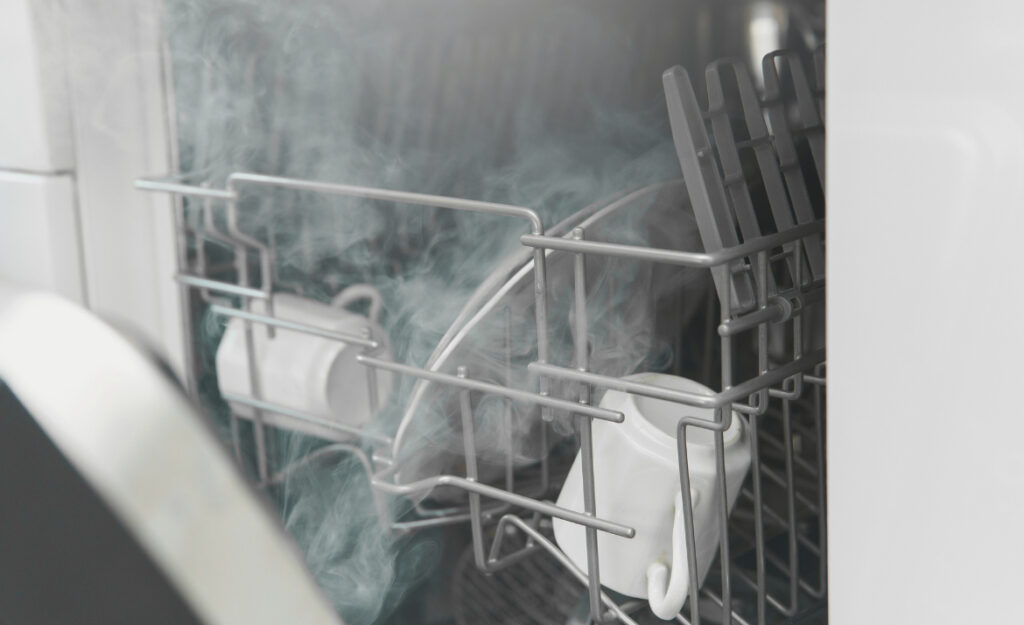
Show the team how to spot irregular temperature fluctuations. Instruct them to flag any fogged windows or inconsistent steam output as signs of deeper problems requiring immediate action.
Evaluate pump, motor, and drain for emerging issues
Listen for unusual pump hums or extended run times after cycles. A healthy motor sounds steady; grinding, clicking, or inconsistent operation needs a maintenance request right away.
Clear out the machines drainwell using a flashlight to spot trapped food scraps or objects. Fast action avoids back-ups and prevents dishwasher breakdowns during continuous operation.
Schedule a full internal drain cleaning monthly. Remove covers, and flush with approved chemicals if visible scale or residue remains. This is critical in areas with hard water or high-volume throughput.
Proactive component swaps for long-term reliability
Replacing key parts before obvious breakdown signs appear supports steady operation all year. Know the shelf lives of seals, gaskets, and specialized internals by consulting manufacturer guidelines in your regular maintenance plan.
Delaying replacement can increase the likelihood of problems multiplying. Use a shared maintenance calendar so everyone knows when its time for fresh componentsnot just when a part fails aloud.
Visual cues for timely gasket and seal changes
Note any frayed, misshapen, or sticky seals during weekly surface wipes. If the door presses unevenly or water seeps out, swap gaskets before internal rust or electrical faults occur.
Instruct staff to gently press each seal and look for cracking or separation. A uniform, rubbery feel signals health, while stiffness or brittleness is a sign of imminent failure.
Document part numbers and sources in a kitchen info binder. Visible cues prevent dishwasher breakdowns by spelling out what needs ordering, and precise tracking speeds up emergency swaps during service.
Replacing critical sensors for accurate control
Plan to replace float switches or temperature probes at scheduled intervals. Set reminders so breakdowns caused by a $10 part dont derail expensive dishware or busy dinner shifts.
Train staff to recognize erratic cycle starts, unexplained beeping, or mixed wash outcomes. These almost always indicate failing sensors that, if swapped in advance, prevent dishwasher breakdowns that could sideline the whole kitchen.
Keep a spare parts kit for the most common sensors. Quick response reduces downtime and stress for everyone on shift, putting the team back in control and onto the next ticket.
| Component | Average Lifespan | Signs It Needs Changing | Next Step |
|---|---|---|---|
| Door Gasket | 12-18 months | Leaks, tears, lost elasticity | Replace at inspection, order ahead |
| Spray Arm Bearings | 24 months | Noisy, wobbly, stuck in place | Swap during planned downtime |
| Float Switch | 18-24 months | Erratic fills, water overflows | Install spare, mark replacement |
| Detergent Cap | 12 months | Loose, wont close, residue | Change as part of annual routine |
| Heater Element | 3-5 years | Temperature errors, slow drying | Test annually, replace at failure |
Staff habits that protect machines and streamline service
Daily behaviors are as crucial as technical routines in helping prevent dishwasher breakdowns. Staff who internalize these habits become the kitchens first line of defense against disruption and equipment wear.
Modeling good practices, especially by senior staff or lead dishwashers, makes routines natural and sustainable. Peer learning keeps the focus on prevention, not panic or blame after the fact.
Racking strategies for smooth water flow
Team members should load racks so each item faces spray jets directly, avoiding overcrowding. This unreachable stacking blocks jets and increases the risk of residue, extending wash cycles and amplifying mechanical strain.
Prompt removal of racks after the bell rings prevents heat or steam from warping lightweight trays or rubber components. Remind everyone: one empty rack in hand beats two warped in the washer.
Rotate responsibility for rack organization week-to-week. Friendly accountability boosts consistency, helping prevent dishwasher breakdowns due to poor water circulation or residue that builds undetected under misaligned racks.
Quick pre-scrape routine before loading
Establish a clear policy: Every plate must be scraped free of solid debris before hitting the rack. Dont allow rush or cross-talk to compromise this rule.
Position bins and scrapers within arms reach of the loading area. No one should walk more than two steps with a dirty tray, decreasing mess and the impulse to skip steps under time pressure.
Reinforce with sayings like, Fast, not sloppy, keeps you happy. Quick, consistent pre-scraping routines prevent dishwasher breakdowns by keeping food chunks out of pumps and filters.
Establishing a non-negotiable reporting and escalation system
Setting a clear protocol for problem escalation gives staff confidence and maintains trust between kitchen and maintenance teams. This approach guarantees that minor issues dont spiral into failures that prevent dishwasher breakdowns from being avoided entirely.
Documenting every finding, anomaly, or error code allows the team to spot patterns. Frequent minor issues signal bigger maintenance needsa single source of truth prevents miscommunication and missed signals.
Trigger points for immediate escalation
If the machine emits new noises, vibrations, or warning codes, staff must halt use and alert a supervisor. Empower everyonenot just managersto stop the process and reach help before equipment gets damaged.
When more than two cycles in a shift end with residue or food left on plates, halt and investigate causes immediately. Dont allow dish throughput to mask an underlying breakdown risk.
Whenever water fails to drain promptly, treat it as an immediate fix, not a tomorrow job. Responsibility is shared: no one should wait for the next shift to speak up. Fast reporting is prevention.
Maintaining motivated compliance with checklists
Audit logs weekly and highlight teams who complete every task, rewarding accuracy and consistency. Pair old and new staff for shoulder-to-shoulder training to embed habits.
In team huddles, share stories where sticking with routines clearly helped prevent dishwasher breakdowns. Quick storytelling cements these lessons into everyday action without lectures or written tests.
Provide instant, specific praise for staff who document an anomaly or initiate an escalation. Timely feedback builds pride and sets high standards for equipment care across every shift.
Long-term strategies for reliable industrial kitchen operations
Committing to ongoing improvement in dishwasher care pays off through reduced breakdowns, lower repair bills, and longer machine life. Consistency is the linchpin to a kitchens operational longevity and reputation.
Integrating routine checks into broader maintenance plans encourages ownership by staff at every level, from dish crew to shift leads and managers. Kitchens that do this proactively prevent dishwasher breakdowns, not just respond to emergencies.
Looking ahead, build routines around quarterly or annual reviews by a professional technician. Outside audits validate internal habits, spot missed risks, and let staff learn new best practices hands-on.
Build a culture that celebrates equipment uptime and service excellence. When teams prevent dishwasher breakdowns, everyone shares the satisfaction of smooth, stress-free shifts and customer satisfaction increases.
Keep innovating with staff suggestions. Review logs quarterly and adapt routines as neededflexibility ensures continuous improvement while retaining proven steps that make breakdown prevention second nature.
Frequently Asked Questions
What is the best way to schedule routine checks for industrial dishwashers?
Combine daily, weekly, and monthly routines with shift checklists and a digital logbook. Assign responsibilities so checks happen regardless of who is on shift or how busy things get.
How do you know which dishwasher parts to prioritize for preventative replacement?
Start with gaskets, filters, and sensors, as these often wear first. Use the manufacturers recommended intervals and adjust based on observation of wear and service records.
Are chemical levels really checked daily in most kitchens?
In high-performing industrial kitchens, yes. Checking and recording chemical levels is a habit that quickly pays for itself by reducing errors, poor cleaning, and abrupt breakdowns in the middle of dinner service.
Can small leaks wait for a slow night to fix?
Prompt action is always better. Even minor leaks risk electrical faults, slip hazards, and internal damage, and can lead to breakdowns that disrupt entire meal periods unexpectedly.
How can you motivate a busy team to stick with these routines?
Highlight success stories during meetings, give specific praise for catching issues early, and keep logs visible. When staff see real results and receive feedback, habits stick more naturally.