

Picture a busy lunch rush in an industrial kitchen: stacks of plates multiply with every order, and efficiency is the name of the game. Knowing the best way to load industrial dishwashers efficiently can make or break the pace. A well-loaded machine gets dishes spotless with less time and less stress.
Industrial kitchens depend on systematic cleaning as much as food quality. When you load industrial dishwashers efficiently, you keep service moving and avoid running short on sanitized wares. Every tray, utensil, and pot needs a spot—and a plan—for thorough cleaning.
This guide offers real-world tactics and step-by-step advice to help anyone on the dish station improve results. Dive into actionable strategies, example scenarios, and proven rules to load industrial dishwashers efficiently and keep every shift running smoothly.
Create a Prep Routine Before the Machine Doors Open
Developing an efficient prep habit once dishes reach the sink shapes smoother operation and faster turnaround. Each step before a cycle helps load industrial dishwashers efficiently, reducing jams and ensuring clean results without repeat washing.
Set up a sorting station so plates, utensils, and glassware never tangle. Crew working the dish pit can spot problem items faster and maintain pace even when racks pile up, preventing floor backups.
Use a Quick Check Script for Incoming Dishes
Every time carts roll in from the dining room, glance quickly for food scraps, napkins, or tiny bones. A “scrape, check, stack” phrase gets posted above the station. Crew repeat this aloud to reinforce proper habits each shift.
Create muscle memory: tap once on the waste bin, feel the rim for sticky sauces, then set into the correct rack. These micro-moves, repeated, anchor a crew’s routine and make the station run almost automatically.
When newcomers join, shadow them for one round and say, “Scrape, check, stack.” By lunch’s peak, everyone’s synced, and racks fill methodically—not haphazardly, which jams up the machine.
Set Up Color-Coded Sorting Racks
Assign colored bins or racks for glassware, silverware, pots, and service dishes. Hang a quick cheat-sheet on the wall showing which color goes where for rapid reference. Post-lunch, there’s less confusion and faster reloads.
If a glass accidentally lands in the red bin meant for pots, teammates correct each other. This visual routine saves time and lets even new hires participate with confidence, streamlining the station while minimizing misloads.
Renew markers or tapes every few weeks to maintain visibility, preventing faded signs that slow down newer staff. Color gives instant structure so, in the rush, muscle memory overcomes stress.
| Dish Category | Pre-Wash Action | Suggested Rack Color | Takeaway |
|---|---|---|---|
| Plates | Full scrape & rinse | Blue | Prioritize residue removal for fewer rewash cycles |
| Glassware | Fast rinse, check for lipstick | Green | Reduces fogging and boosts shine |
| Utensils | Soak in basin, then shake | Yellow | Keeps pieces from nesting and missing spray |
| Pots & Pans | Scrape, soak tough bits | Red | Prevents clogging drain filters with heavy soil |
| Cups & Small Bowls | Quick rinse, load upside-down | Purple | Minimizes pooling and speeds drying |
Arrange Racks and Space Items for Optimal Water Reach
Placing every dish with intention means all surfaces get maximum water coverage. This step helps you load industrial dishwashers efficiently and avoid residue sticking around, especially during dinner rushes.
Imagine each spray arm as a performer: every item should face the jets directly, with enough space to allow water to flow. When racks are laid out right, results improve in minutes.
Stack Plates Vertically and Avoid Shadowing
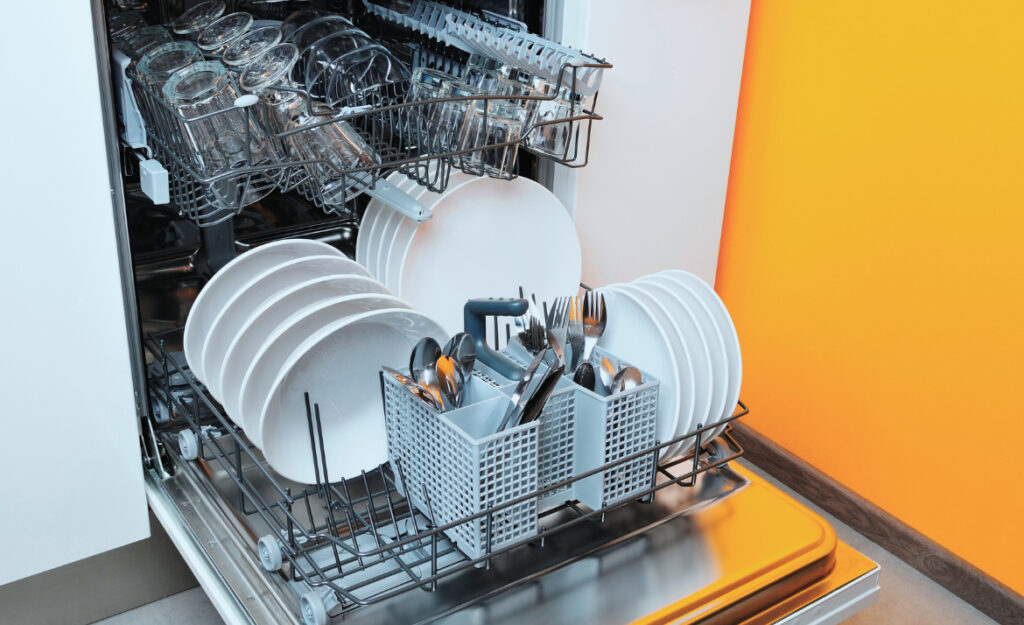
Slide plates into rack slots upright, not flat. Watch for overlapping—every bit hidden can come out dirty. Using the vertical layout lets water sheets glide, whisking away debris quickly.
If plates tilt or overlap, water misses spots under rims. Crew should get a rhythm: clip, check, and move on. Vertical stacking also prevents chips, preserving inventory over months.
Teach staff that, “Flat equals filthy, straight means clean,” ensuring trays emerge spotless, not streaked with last night’s sauce. The difference is instantly visible when unloading.
Separate and Spread Utensils
Gather forks, knives, and spoons—then scatter them among baskets, handles down for better spray. If silverware nestles together, food particles cling stubbornly between tines or bowl curves.
Quickly shake baskets before placing in machines. Assign every utensil a place, avoiding bunching. Trying, “No nesting, handles down,” as a mantra makes staff action clear and consistent.
Alternate utensil types to prevent clumping—put a fork, knife, then spoon, and repeat. Rotating types forces some separation, which gets each piece equally scrubbed by the washer’s jets.
- Load trays so nothing covers another item; hidden areas never get cleaned.
- Keep pans upside-down and tilt at an angle to drain water fully—speeds up drying and avoids pooling.
- Stagger bowls slightly so pressurized water fits between, reaching the whole surface.
- Line up larger pieces on the machine’s outer edges for best spray-bar reach.
- Fill racks completely but never jam; stuffed racks lower overall washing power because of blocked jets.
Following these rack rules every shift helps the crew load industrial dishwashers efficiently and avoid time-wasting rewash cycles, especially as new staff rotate through the station.
Review Rack Capabilities Weekly
Check racks for wear and tear every week—bent wires or missing prongs mean plates wobble and block jets. At the start of each week, run an empty cycle to see if spray patterns hit all corners.
Keep a whiteboard checklist near the pit: “Check racks, report repairs, test water pattern.” Assign specific shifts to handle inspections, and reward clear reporting with early break swipes.
This step fortifies the habit of loading industrial dishwashers efficiently, as racks that flex or gap create hidden trouble spots that repeat until fixed, so preventative checks give lasting value.
Handle Non-Standard Dish Sizes
Odd-shaped serving trays, mixing bowls, or specialty utensils need their own method. Slot irregular items along the rack’s outer edge or place flat on designed racks meant for them to keep stability and promote full water access.
Explain why: Machines are engineered for consistency, but kitchens use all sorts of dishes. “Unusual shape? Edge it or flat-rack it.” By sticking to this, staff see less dirty residue, saving time and cleaning detergent.
Use written diagrams near machines showing where each item goes. This eliminates hesitant pauses, especially during a deep-dish Sunday brunch or event setup with outsize platters.
- Check glassware for lipstick or fingerprints before lining up, as these stains can survive the wash if not removed properly.
- Always rotate racks between cycles to distribute wear and prevent overloading a single tray, reducing downtime for maintenance.
- Instruct staff to avoid double-stacking any trays; overlapped items shield each other from spray and exit unclean.
- Show new hires common rack loading diagrams, and drill for the most-used item groups to reinforce best placement points.
- Encourage the team to flag overfilled or oddly balanced racks before they go into the machine, preventing mid-cycle jams.
Adding a checklist to the side of each dishwasher highlights these reminders so even on turnover-heavy teams, loading industrial dishwashers efficiently remains the standard.
Choose Detergents and Rinse Agents Strategically
Correct detergent and rinse agents aren’t just about chemistry—they’re essential for anyone aiming to load industrial dishwashers efficiently. Choosing the right products tailors the clean to your wares and water type, so each load runs smooth, clear, and fast-drying.
A mismatched soap can leave film or force re-cleans. Review manufacturer specs, observe results per shift, and rotate brands or dosages only as needed based on real dish outcomes, not habit or guesswork.
Align Detergent Type with Wash Load
Heavily soiled pans need concentrated enzymes or alkaline blends; delicate glassware requires gentler, low-suds products. Chart loads by category on a station sign—“Heavy / Standard / Delicate”—and match detergent labels to each cycle.
Changing formulas without warning leads to conflicting results and frustrated staff. Standardize brands and re-train as needed. For stubborn tarnish or tea stains, boost dosage only after confirming normal cycles aren’t enough.
“If in doubt, check the chart” gets repeated in team huddles, keeping everyone focused on the goal to load industrial dishwashers efficiently and select agents to match, not mismatch.
Monitor Rinse Agent Timing and Dosage
Spot-check drying after each shift: Are dishes still wet? Try a higher rinse agent setting or swap brands. Place fill logs on the wall as visual reminders to restock before the next rush.
Encourage the phrase, “Shine check at close.” This simple end-of-shift step, like a barista’s espresso test, keeps quality high. Every machine gets a quick inspection; crew notes streaks or missed rinses.
Document tweaks in a shared log. “Added one unit, increased shine.” This feedback loop means the team learns together, and anyone can catch and adjust issues early, helping the kitchen load industrial dishwashers efficiently and consistently.
Troubleshoot Frequent Cleaning and Loading Pitfalls
Discover and correct trouble spots as soon as they show up, so every batch gets cleaner—and stays clean—without re-running cycles. Addressing issues quickly creates a system where you can always load industrial dishwashers efficiently, even under pressure.
Communication and staff feedback are the fastest tools to find inconsistencies. From stuck-on food to detergent streaks, identifying patterns keeps crews proactive and customers satisfied without last-minute fixes.
Spot and Solve Food Debris Build-Up
If dishes emerge with stuck food, check for missed scraping or pre-soak steps in the prep station. Reinforce, “No scrape, no load” with team reminders and swift corrections. A service lead can walk the dish route once per hour to monitor habits.
Look for overflow in drain baskets—a sure sign too much food residue slipped through. Develop a staff script: “Full basket? Change it now.” This keeps water clean and spray arms clear all day long.
Feedback should sound like, “Let’s reseat these plates and scrape before next tray,” instead of blame. Technique focus boosts staff morale and keeps everyone cycling through best practice routines.
Address Streaks or White Residue on Glassware
Identify if water spots stem from overloading racks, hard water, or detergent problem. Revisit rack spacing—remind team, “Glass needs air, not company.” Add a water test kit to rule out mineral deposits.
If hard water is the culprit, recommend a water softener or a specialty rinse aid. Post staff notes: “Foggy glass? Try new rinse agent.” Document changes visibly so adjustments are shared.
Empower staff to request guidance by showing a sample glass to a supervisor each shift if results consistently fall below par. This invites early troubleshooting for everyone using the machine.
Enforce Shift-to-Shift Consistency with Quick Checklists
Clear checklists mean each shift loads industrial dishwashers efficiently—even when team members rotate or cover unexpectedly. Checklists stop slip-ups before they cause downtime, unreadable glassware, or health hazards.
Keep checklist cards by the machine with clear verbs and box-tick steps for each category: prepping, rack loading, detergent settings, and unloading routines, so tasks never get missed in rush hour turnover.
- Scrape dishes swiftly using bent spatulas on all sides before sorting to prevent food from landing in the drain tray and clogging the system.
- Group similar-sized items together for stable stacking and balanced racks, avoiding collisions or breakage during washing or unloading.
- Check detergent and rinse agent tanks at the start of each shift; low levels lead to streaks and require full rewashes which eat valuable prep time.
- Revisit rack diagrams to place non-standard dishes using the prescribed layout, keeping water flow at maximum for hard-to-fit items like sauce pots or large lids.
- Wipe out machine edges with a towel after each cycle to prevent buildup of grime and chemical residue, improving long-term performance and extending machine lifespan.
Assign a team “checkpoint lead” for each daypart. At lunch rush, the lead walks through the card with a new trainee as a drill, not a chore list, making loading industrial dishwashers efficiently second nature over time.
Rotate Machine Parts and Maintain Daily Cleaning Habits
Rotating racks and inspecting dishwasher arms keeps spray bars flowing and reduces machine downtime. Maintaining these habits every day means you can load industrial dishwashers efficiently round the clock.
Preventative action, such as clearing jets and running monthly descale cycles, stops bigger repairs from sneaking up. Assign these micro-tasks to specific shifts, so no steps are skipped even at peak volume.
- Remove and rinse spray arms every morning; debris inside reduces wash quality and creates blind spots.
- Soak and brush rinse screens weekly to prevent buildup and restore high-pressure spray to hard-to-reach corners.
- Rotate wire and plastic racks each day, allowing even wear while keeping basket prongs straight for consistent plate spacing.
- Replace damaged baskets as soon as discovered—waiting leads to unexpected jams or plate breakage, slowing the day’s flow.
- Document repairs or adjustments in a shared log for quick troubleshooting at shift handoffs, so incoming staff are never caught off guard by a new issue.
Consistent daily and weekly routines support kitchen teams in loading industrial dishwashers efficiently at every turn, keeping output professional and reducing downtime from surprise repairs.
Conclusion: Sharper Routines, Clean Results Every Shift
Following tactical steps—prepping, strategic rack loading, right products, and clear checklists—helps industrial kitchens load industrial dishwashers efficiently. Small tweaks at everyday stages add up to plate-after-plate of spotless wares and fewer lost minutes.
Sticking with these concrete routines transforms the dish station into a reliable backbone for busy kitchens. Teamwork becomes smoother, and even new hires catch on quickly, making workflow seamless and service reliable across shifts and seasons.
Smart loading habits are the secret ingredient to an industrious kitchen. Make these practices standard, and every meal service will finish with a full stack of clean, ready-to-use dishes—no extra stress required.
Frequently Asked Questions
How can I train new staff to load industrial dishwashers efficiently? Start with station diagrams, verbal checklists, and practical run-throughs. Encourage shadowing and repetitive routines so muscle memory builds. Revisit and refresh training weekly to maintain high standards and consistency across staff turnover.
What’s the fastest way to check if a rack is overloaded? Hold a loaded rack up to the light and look for shadows or blocked spots between dishes. If water can’t reach certain points, reload. Remind staff, “If you can see light, water can reach.”
Why do glassware items sometimes stay foggy after washing? This might result from overlapping, incorrect detergent, or hard water. Adjust rack spacing, switch to a specialty glass detergent, or use a water softener. Evaluate after each change, and document what works best for your setup.
What daily actions protect the machine’s longevity? Wiping debris off machine edges, rinsing the spray arms, and checking detergent levels ensures all cycles run clean and reduce wear. Assign daily rotation so every shift owns maintenance and machine health is a shared responsibility.
How do we handle mixed loads with both delicate glass and greasy pans? Separate by loading delicate items in one batch, using appropriate detergent and cycle, then switch to a heavy soil cycle for pots and pans. Avoid combining to prevent residue transfer and maximize cleaning efficiency.